


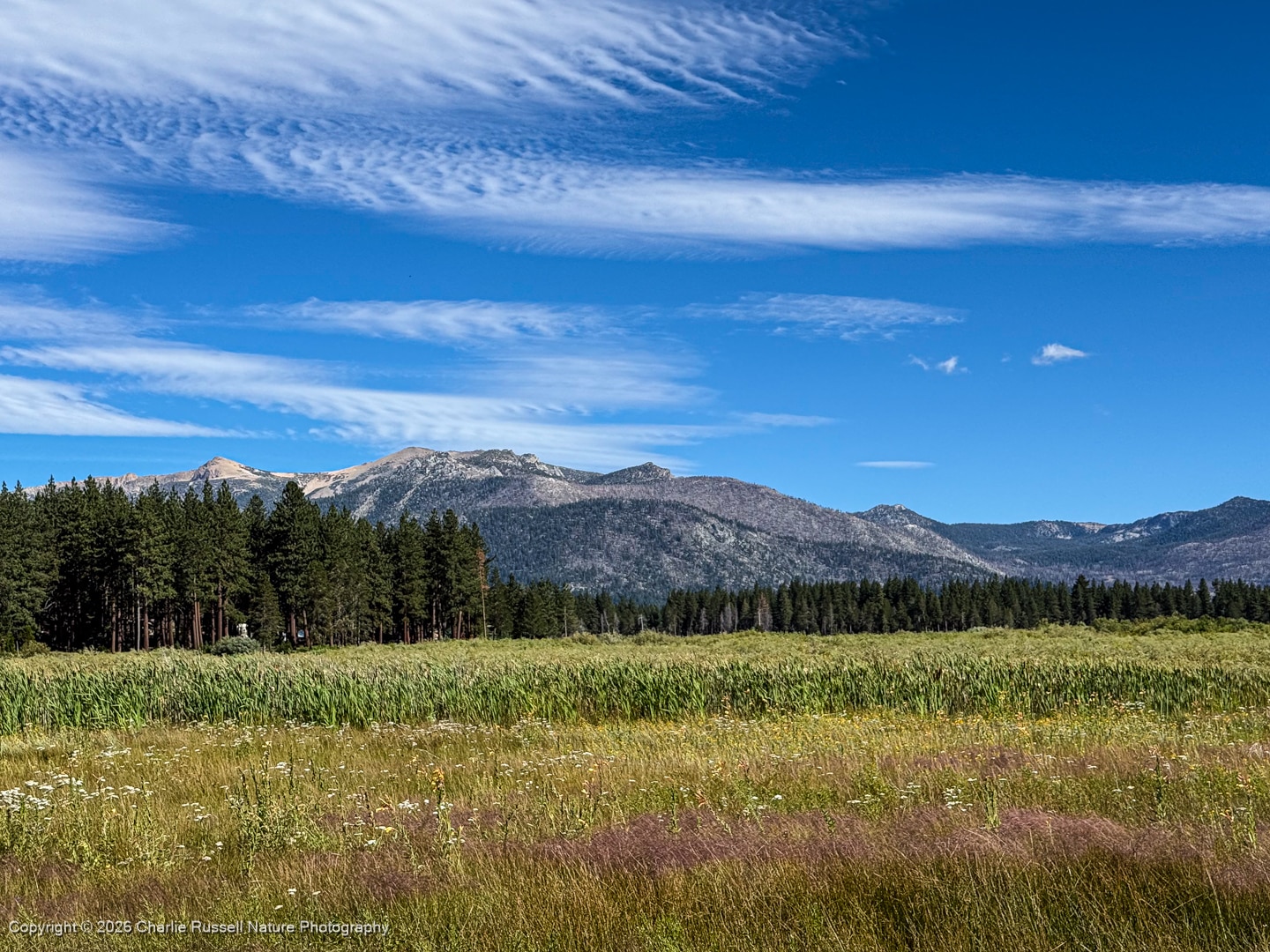
I don’t usually think of the beaches at South Lake Tahoe as being a great place to find wildflowers, but this trail at the Upper Truckee Marsh is a fun little hike along the edge of the lake, with some very interesting plants!
The Flowers
Here’s a sample of a few of my favorites from this hike (click on the image to see a larger view, including the scientific name).
The marsh is the real draw here, with a number of interesting marsh plants that you can easily access without getting into the muck. There is a thin strand of beach along the shore, which is separated from the marsh by a band of willows. There are flowers in the sand, also, but the fun stuff is on the inland side of the beach, along the edge of the marsh.
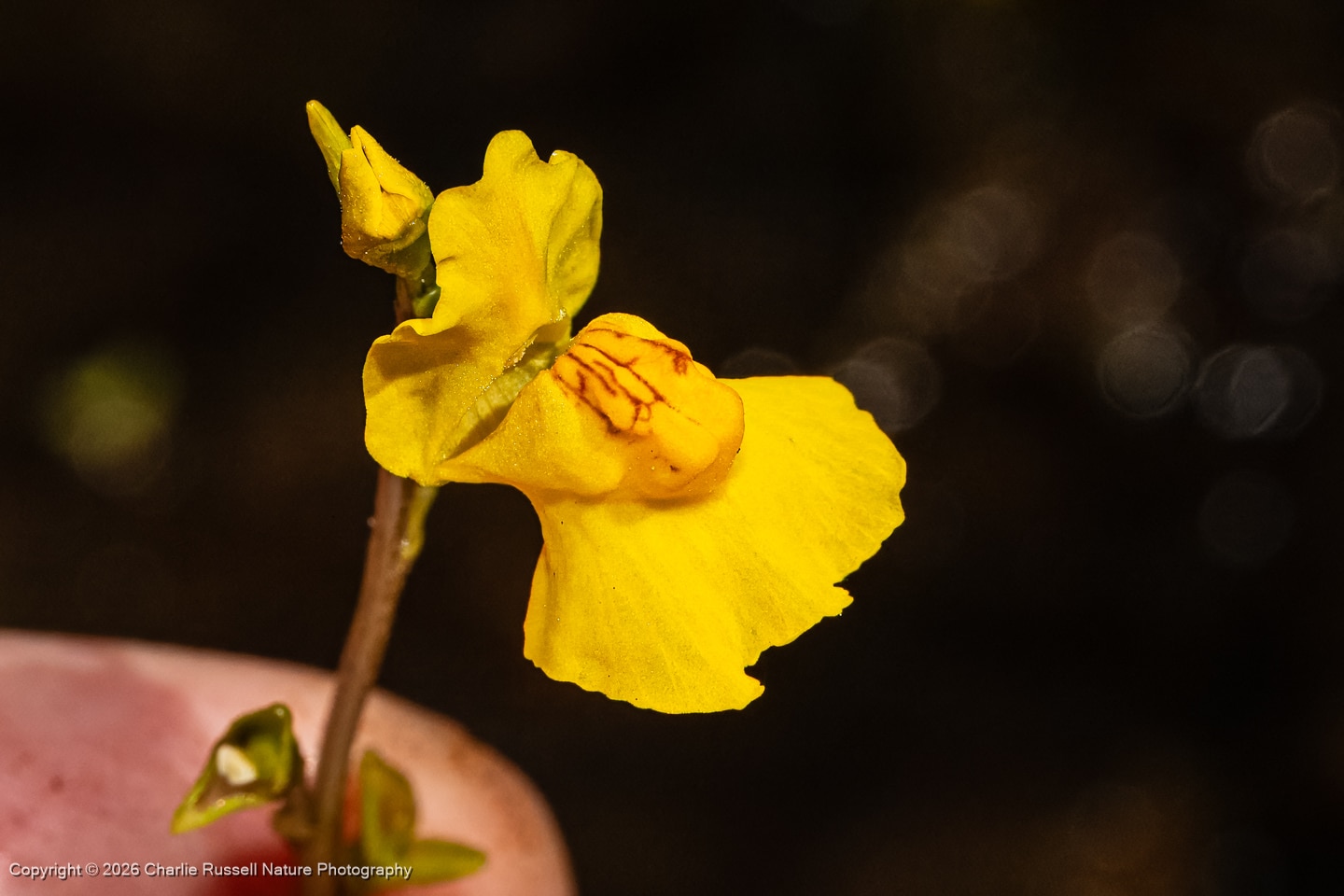
The star of the show this time was a very accessible patch of Common bladderwort, Utricularia macrorhiza. Usually you have to wade into some very mucky (and often deep) ponds to be able to see the flowers of this aquatic carnivorous plant, but at this spot they were blooming right next to the path. Carnivorous? More on this below.
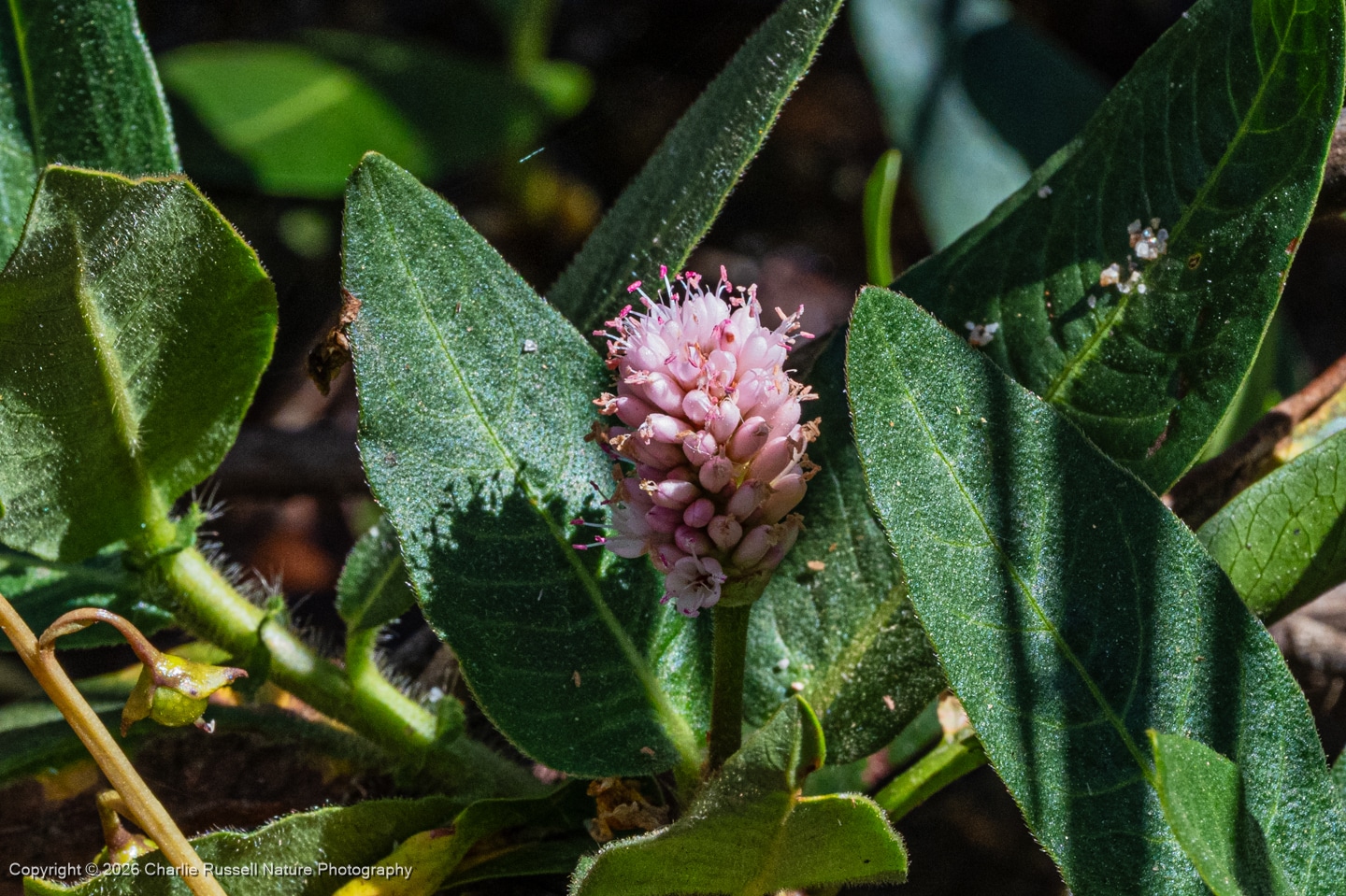
There were two kinds of pink Persicaria species in the water here. Persicaria amphibia is a new species for me.
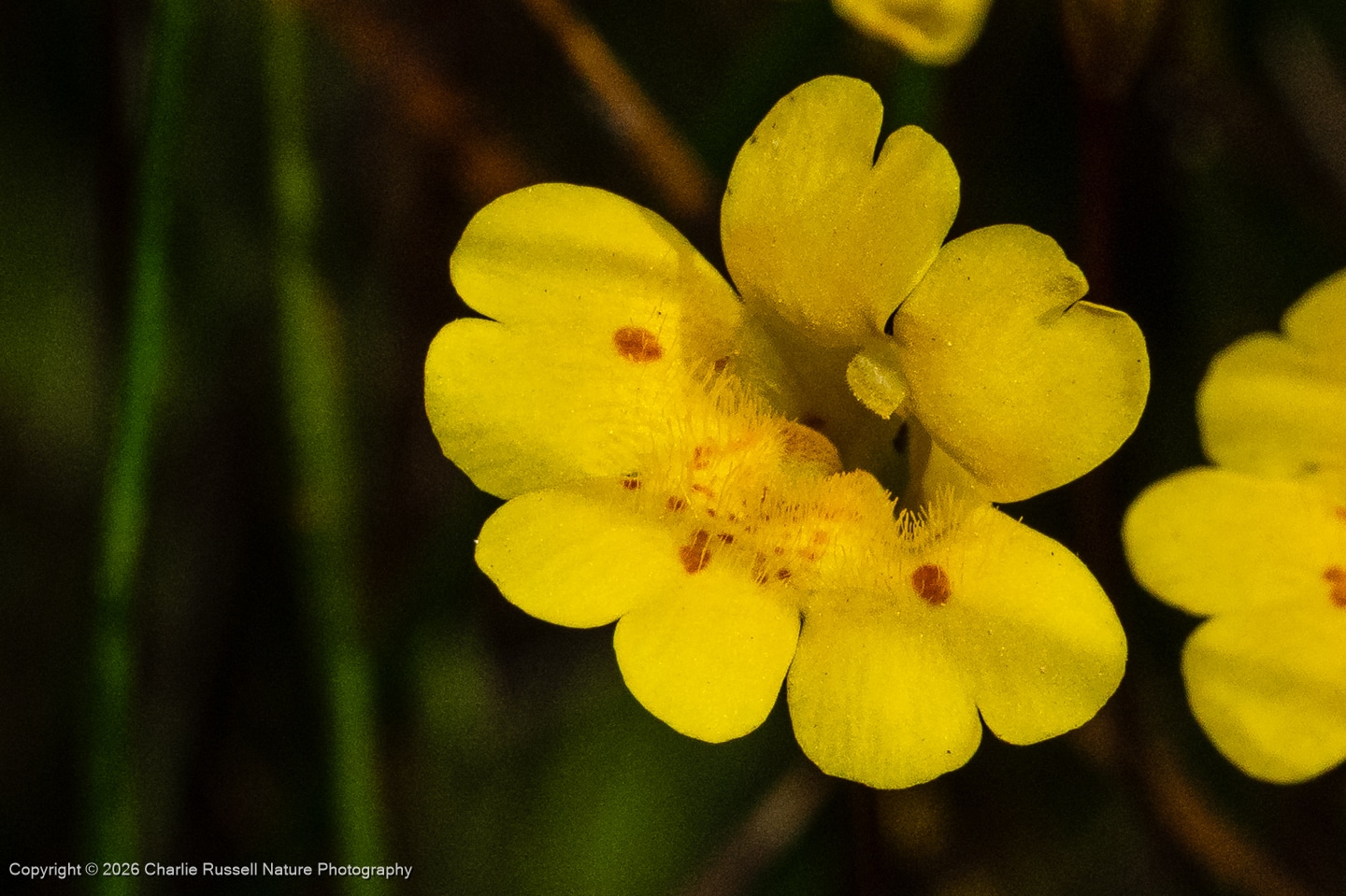
This has been a good year for Primrose monkeyflower on hikes in the Sierra mountains. There were several patches of these on the edge of the marsh, on the edge of the sand.
Here’s a gallery of photos from this hike. For the best viewing experience, click on the lightbox image below. That opens a window that lets you easily scroll through larger versions of the photos. All photos are available for purchase in a variety of formats.
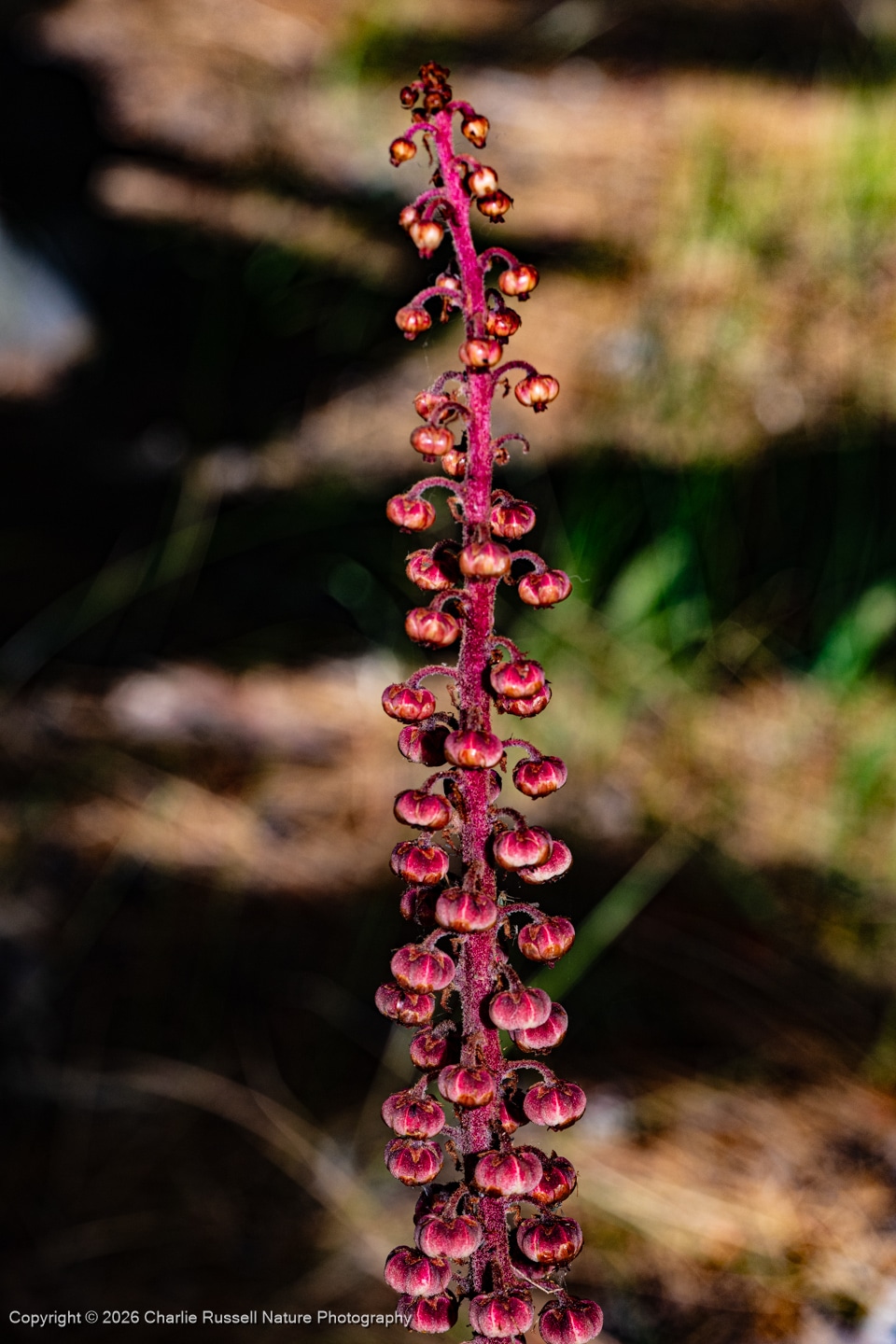
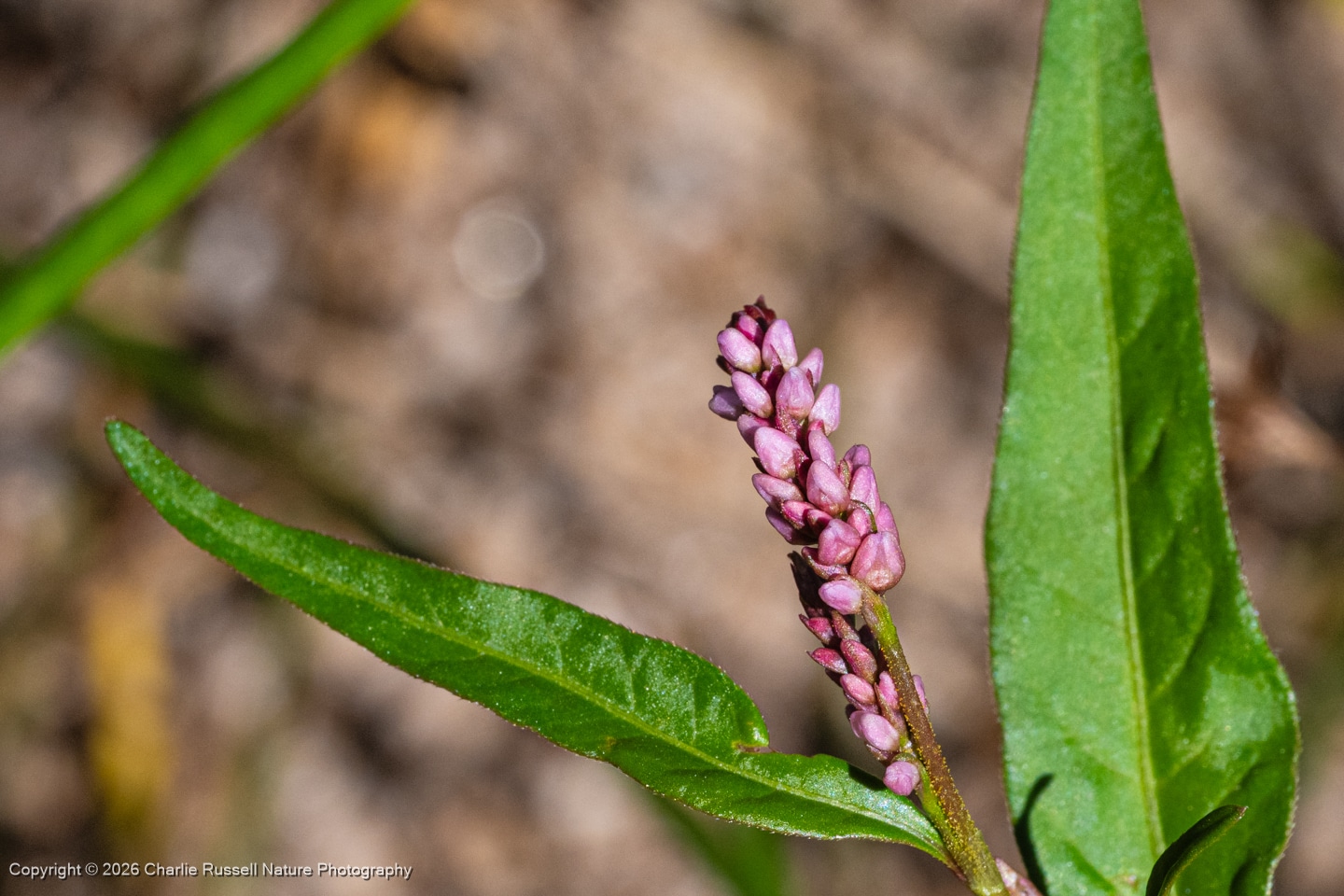
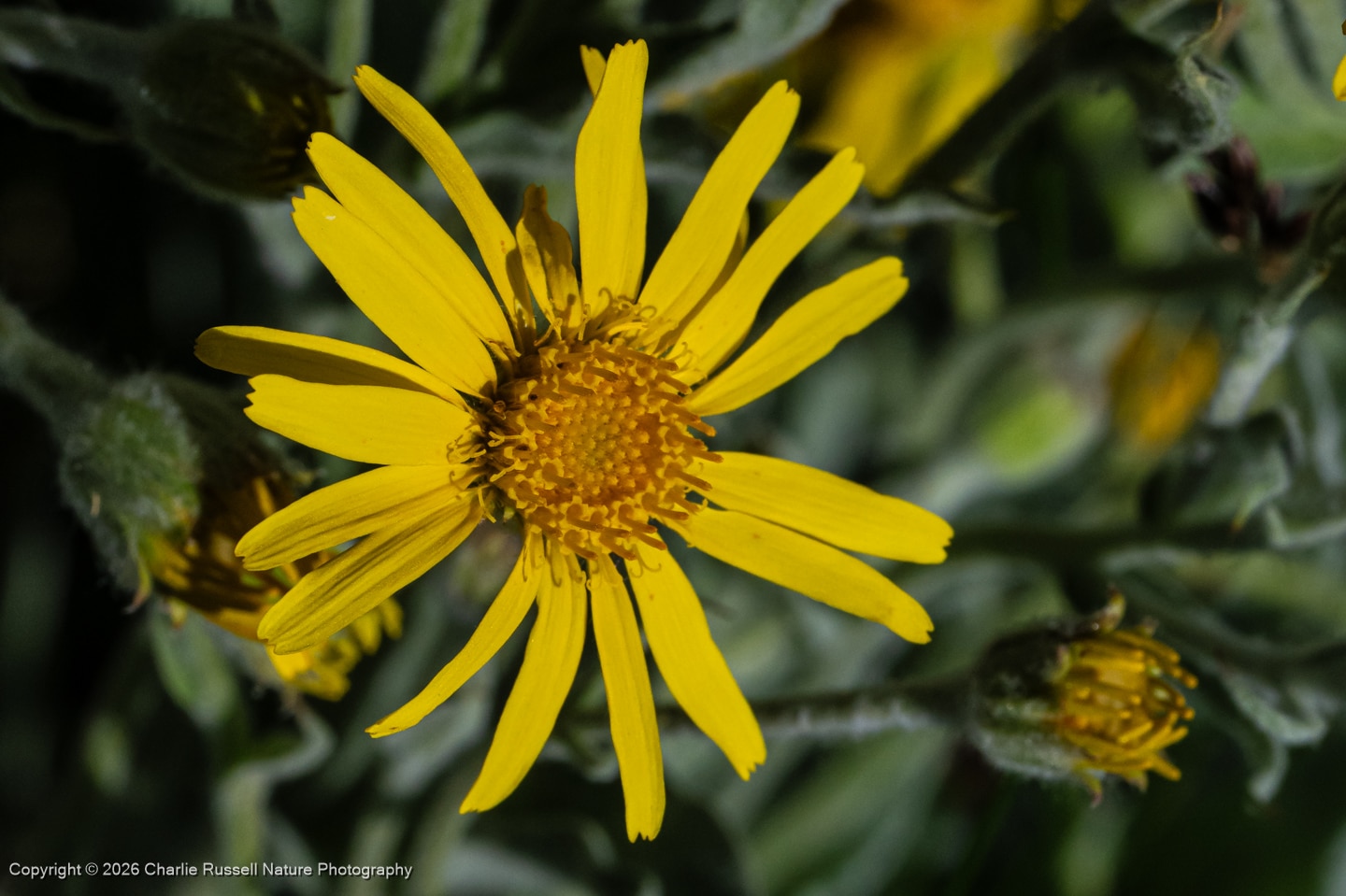
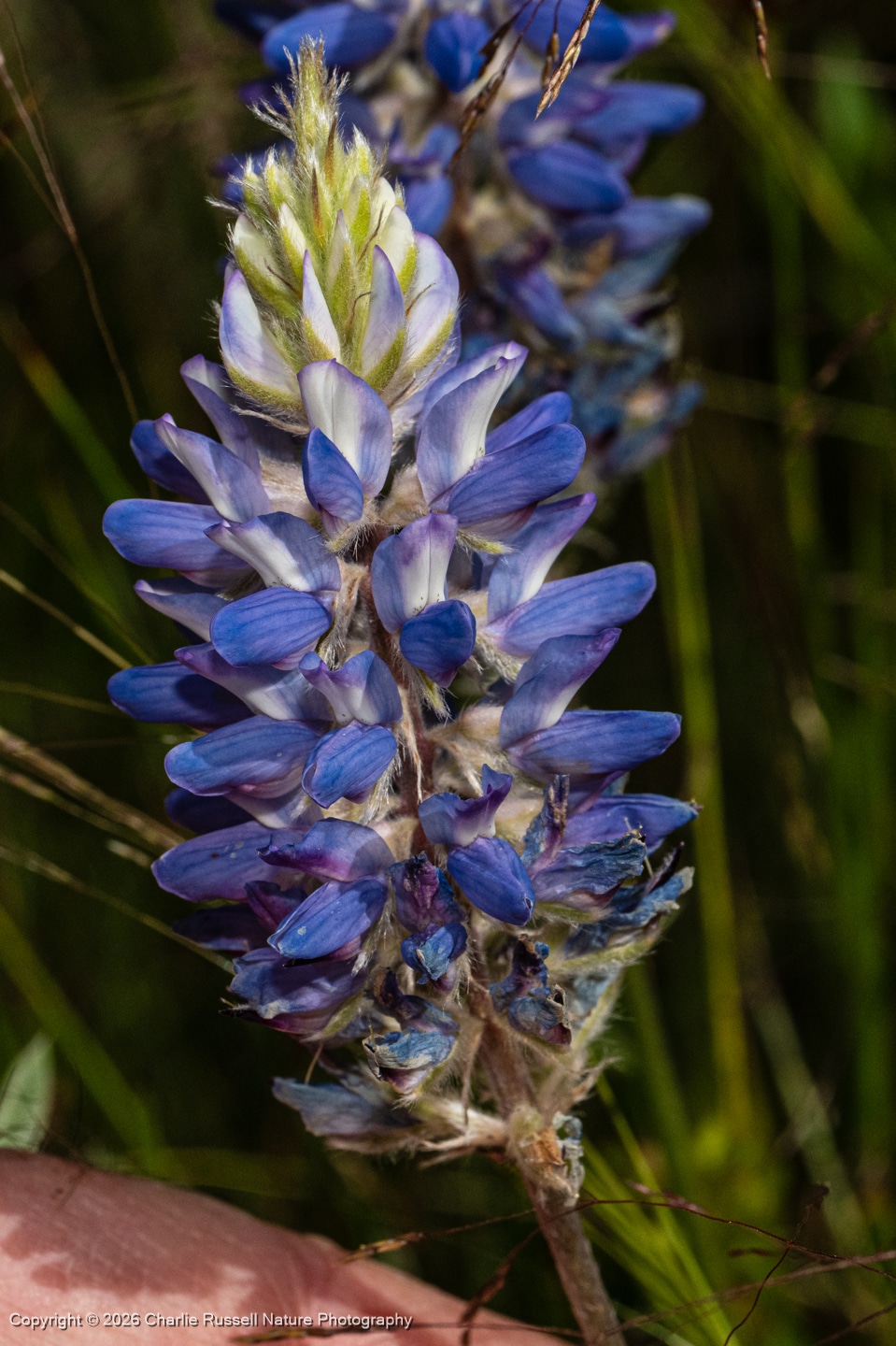
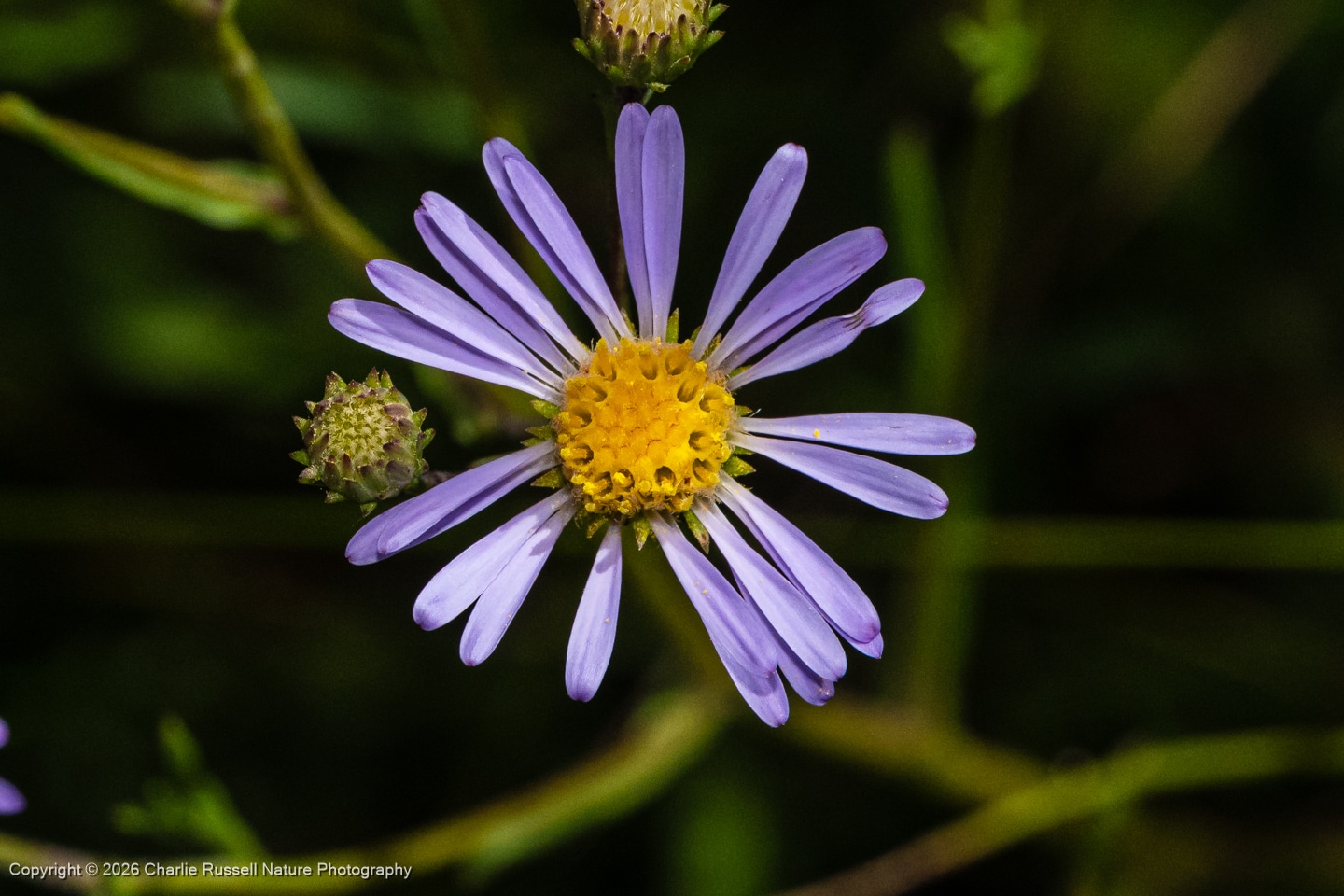
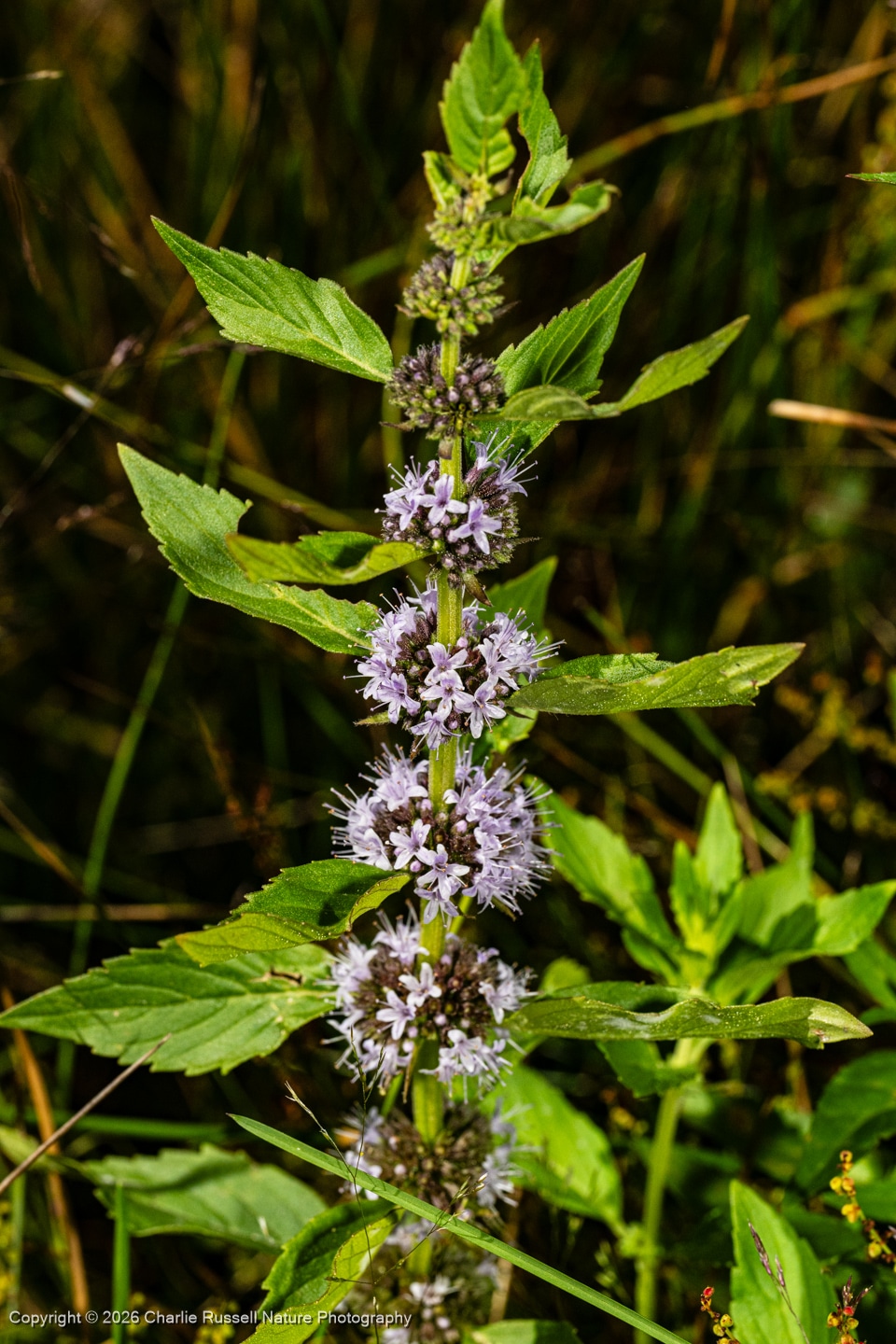
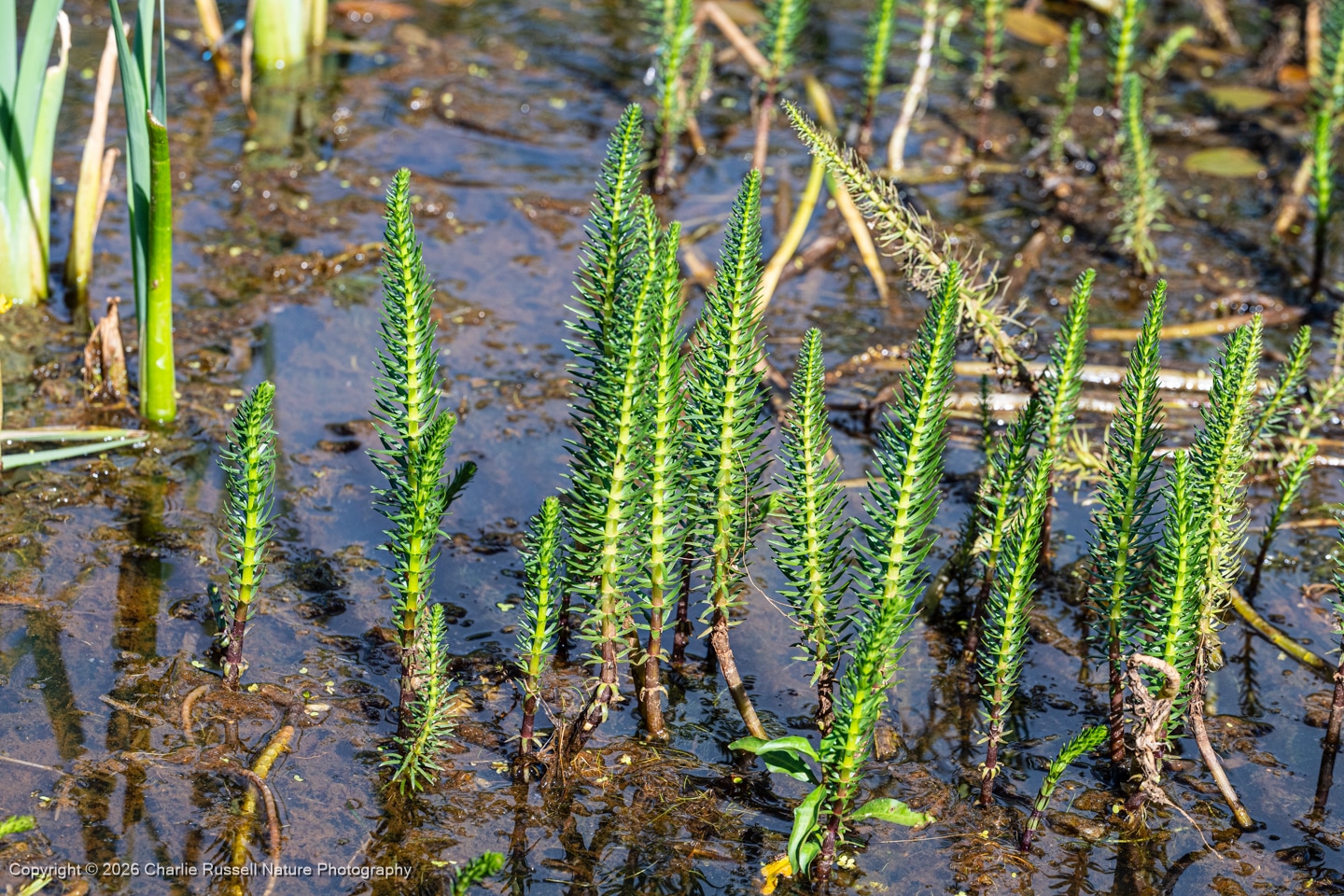
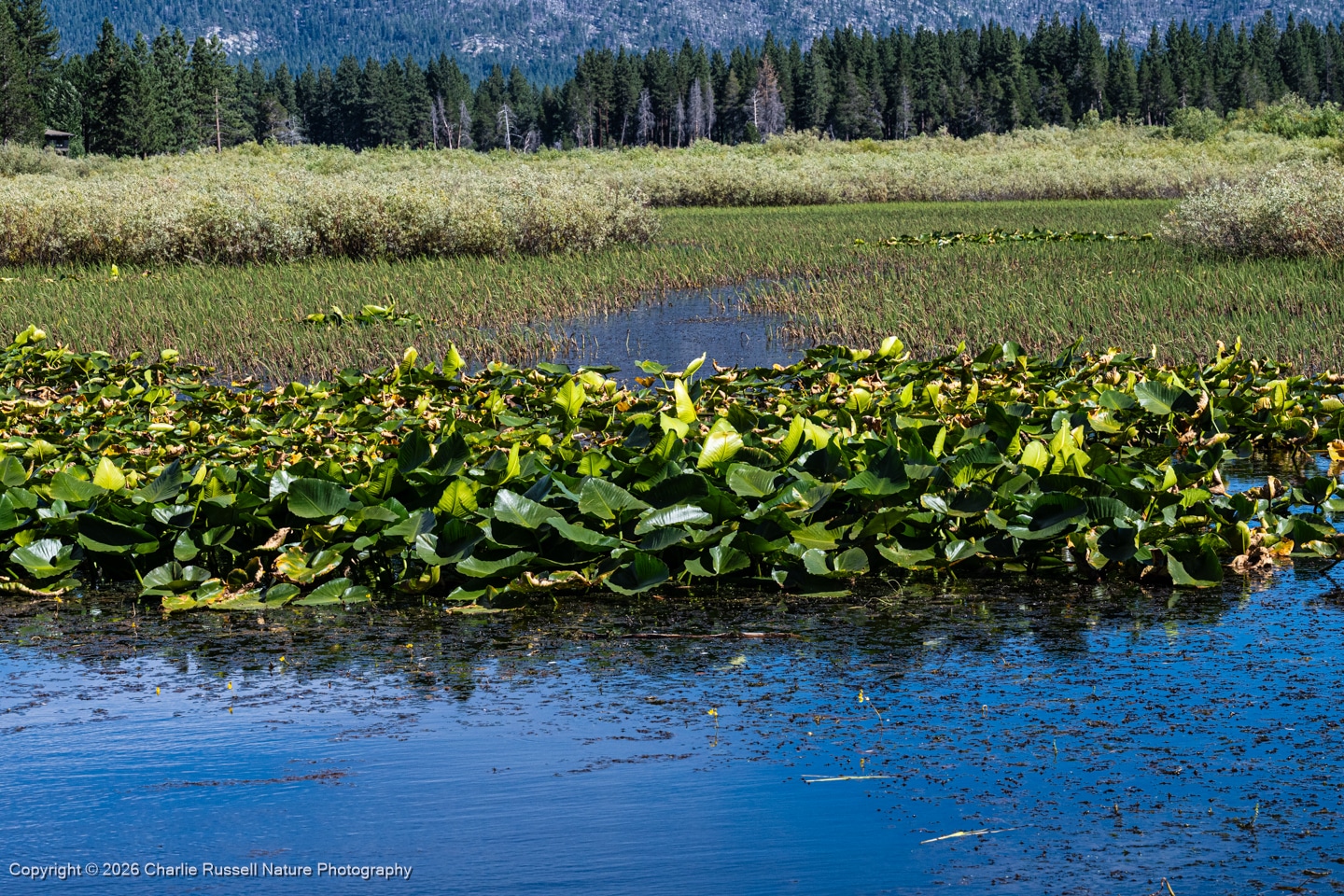
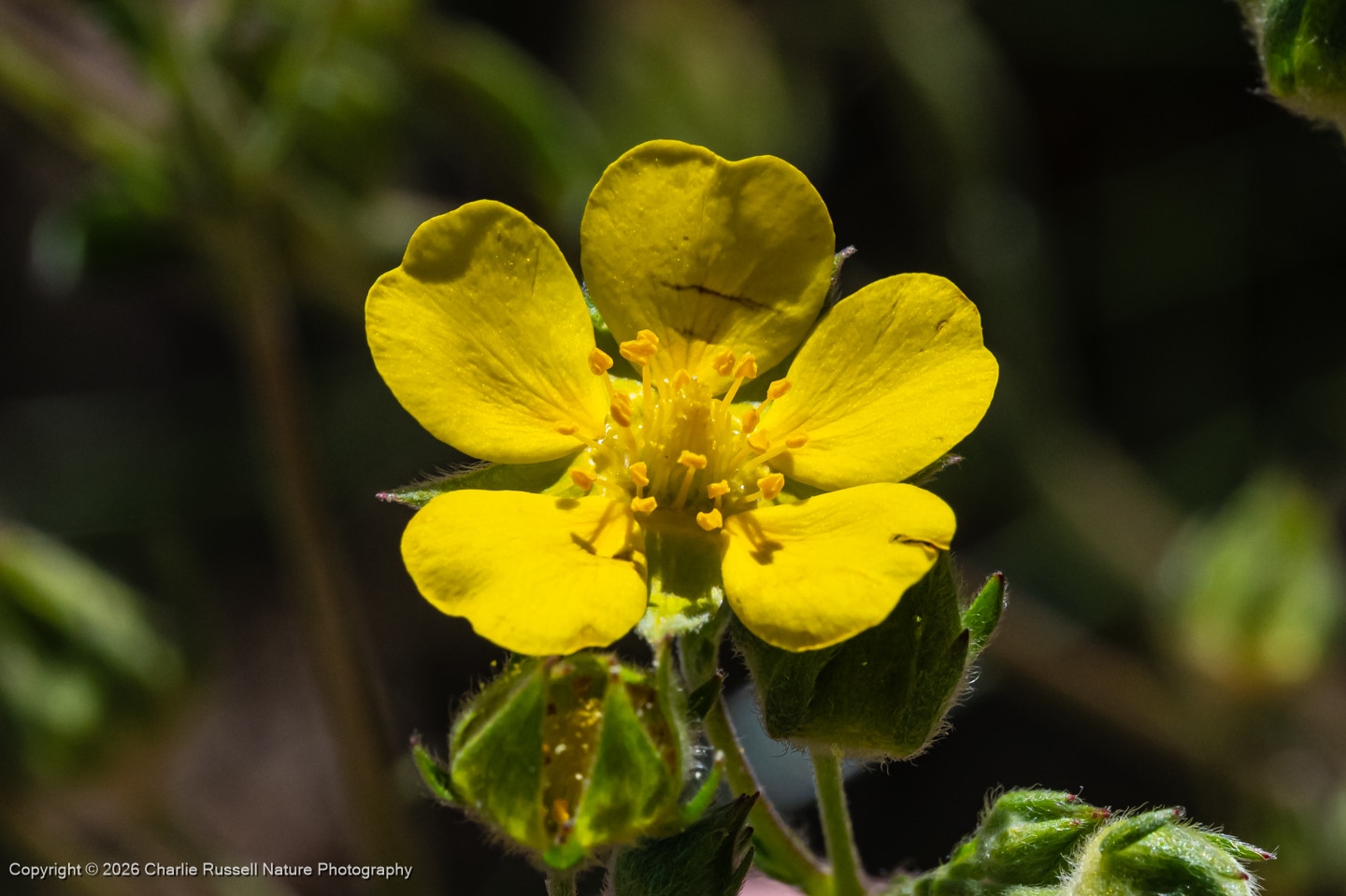
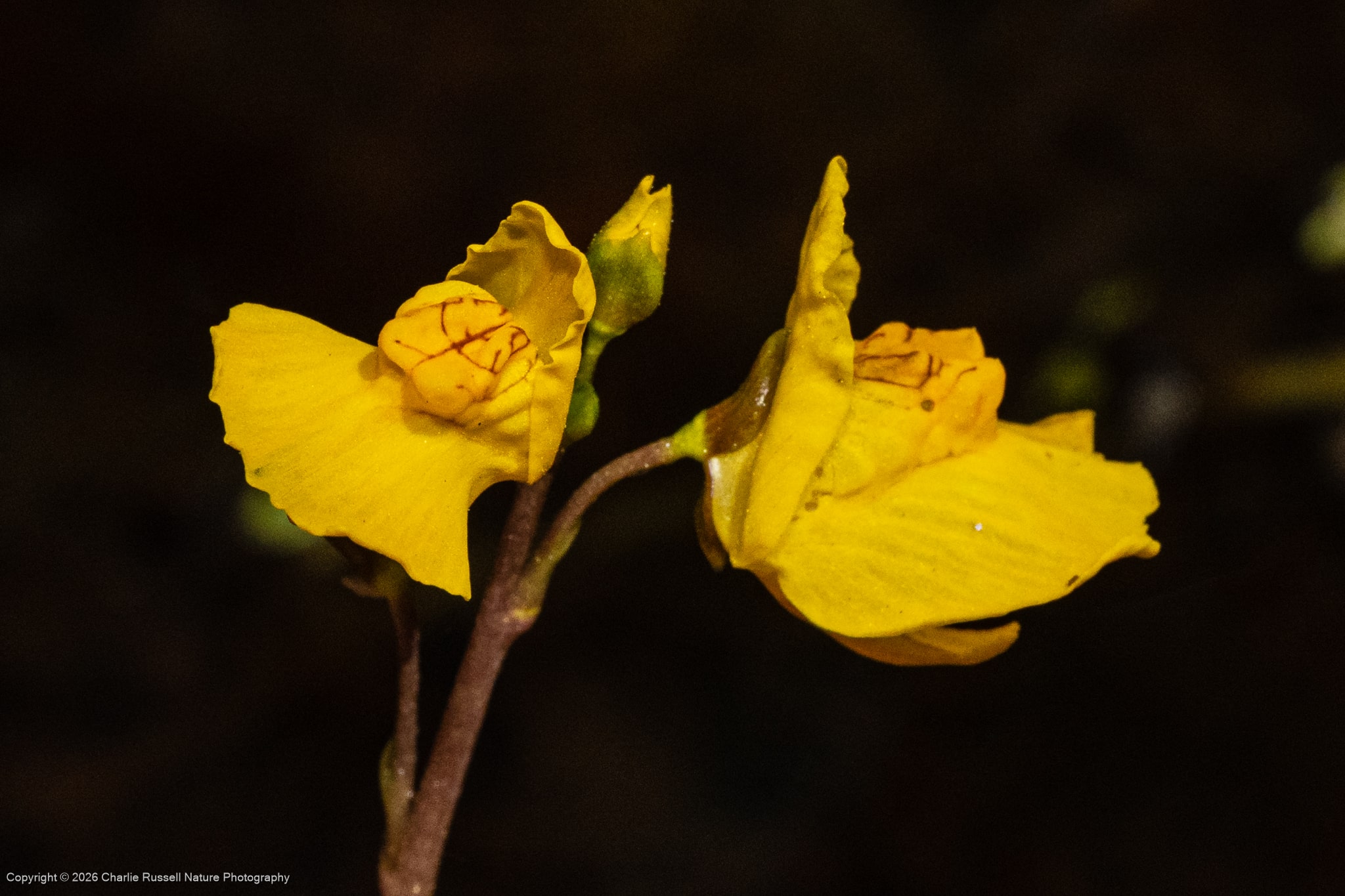
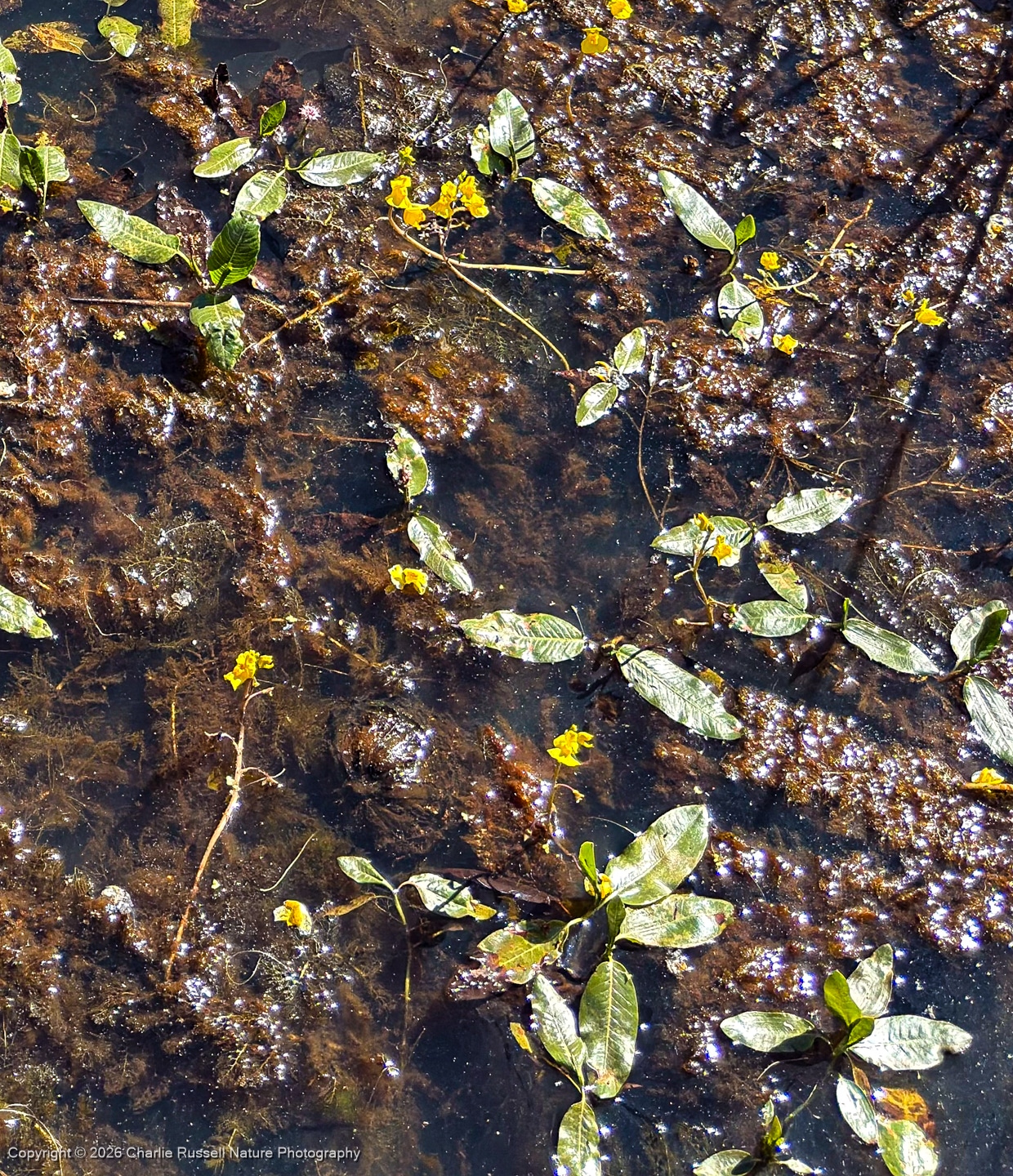
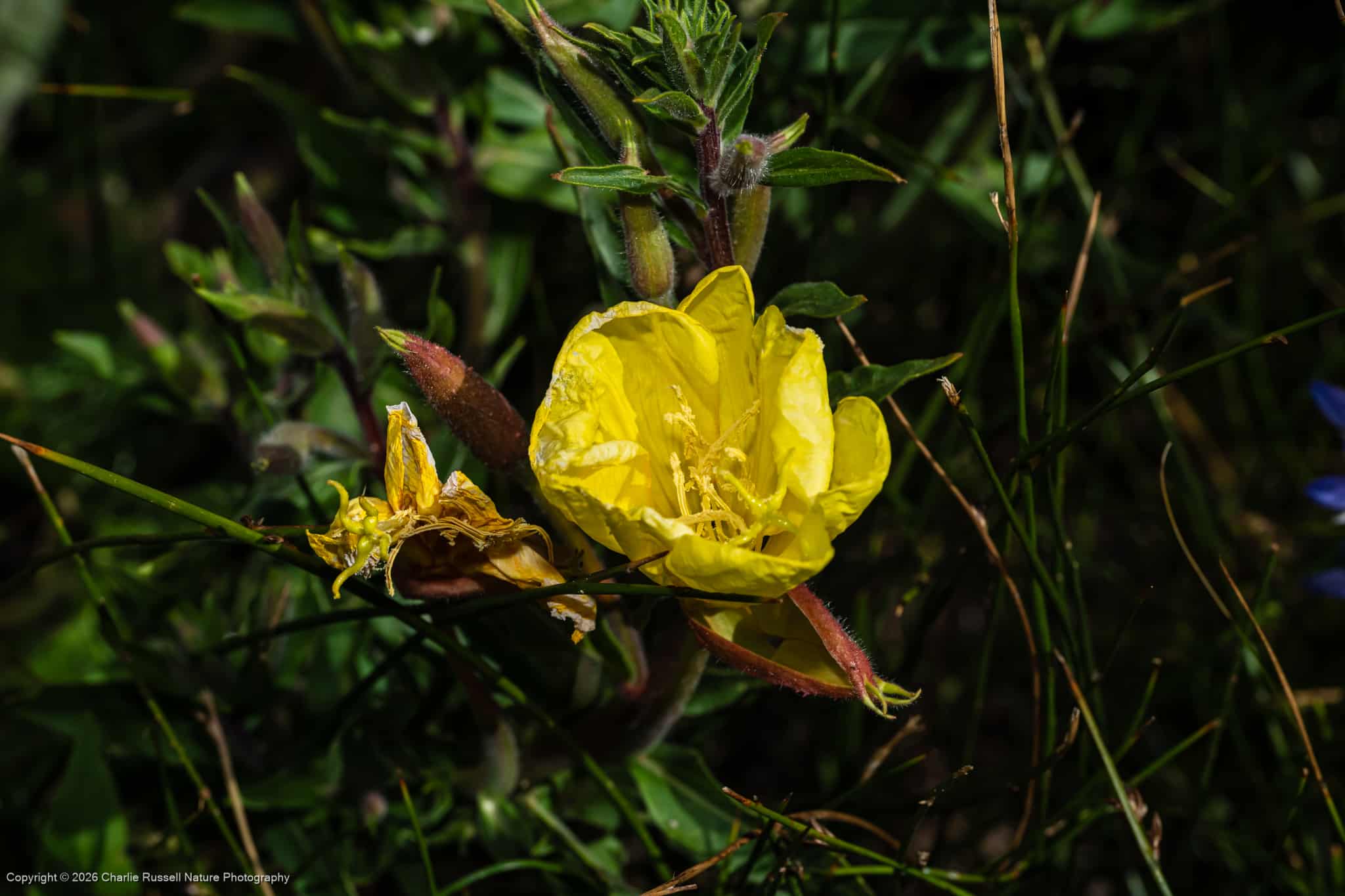
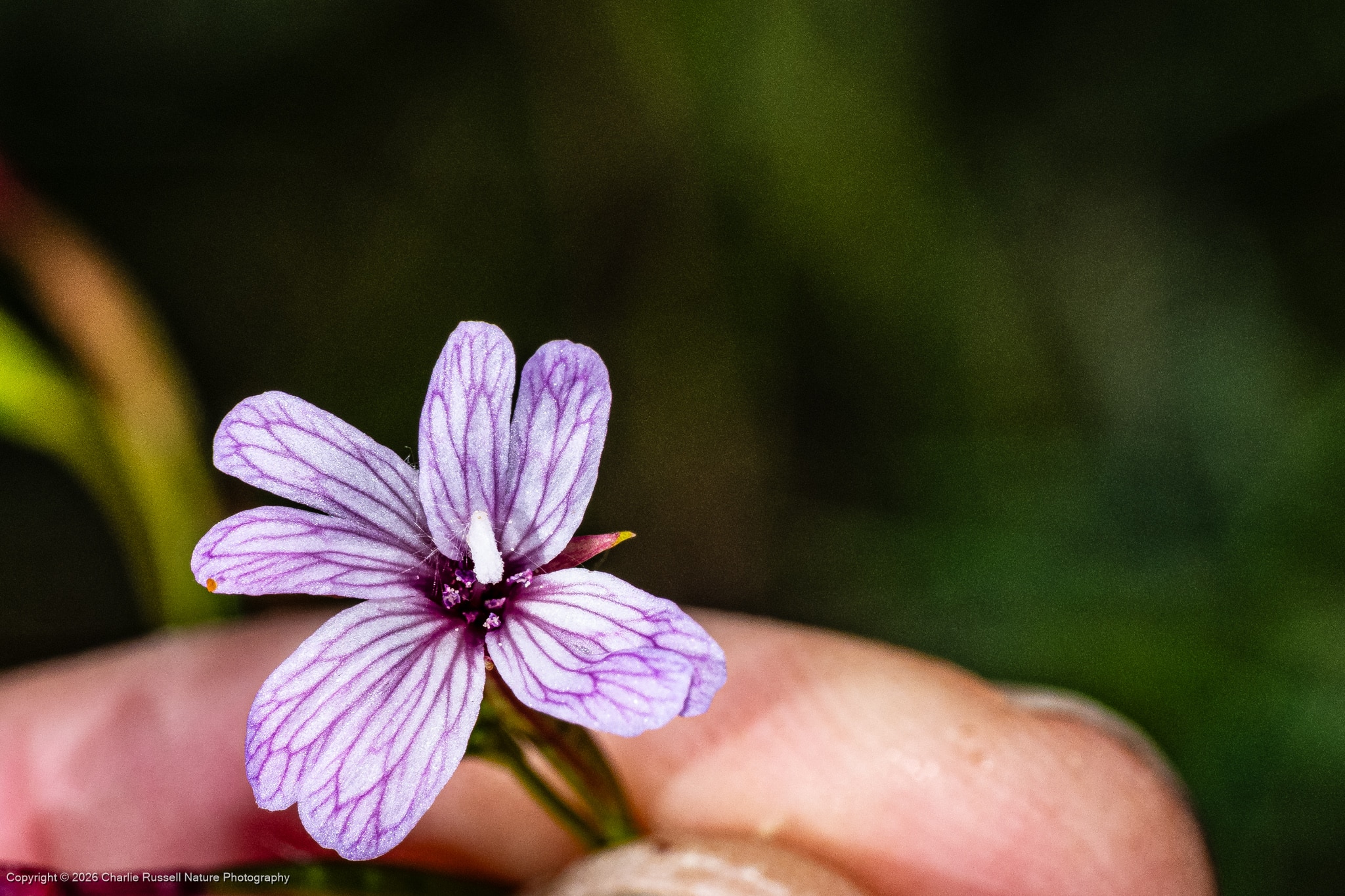
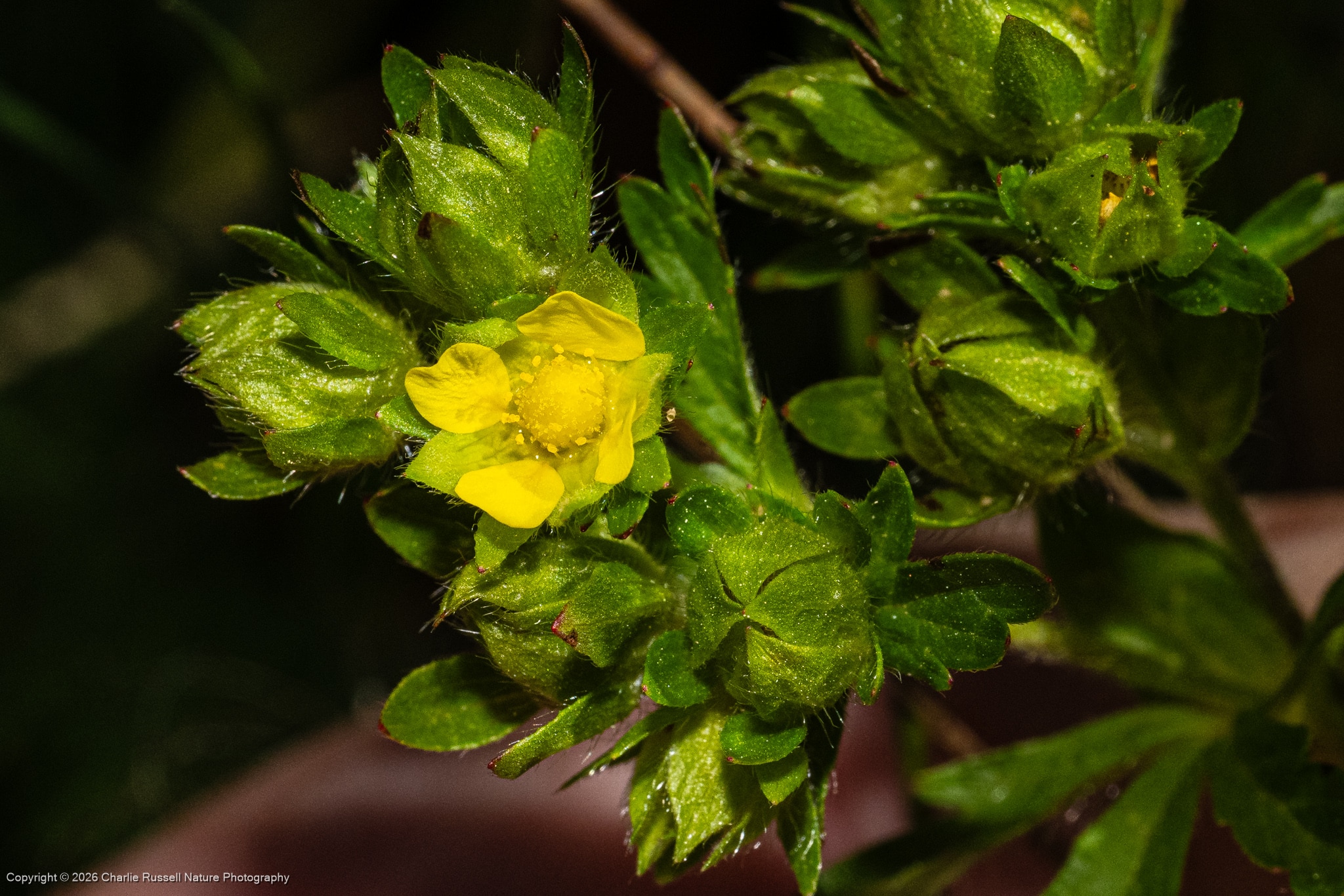
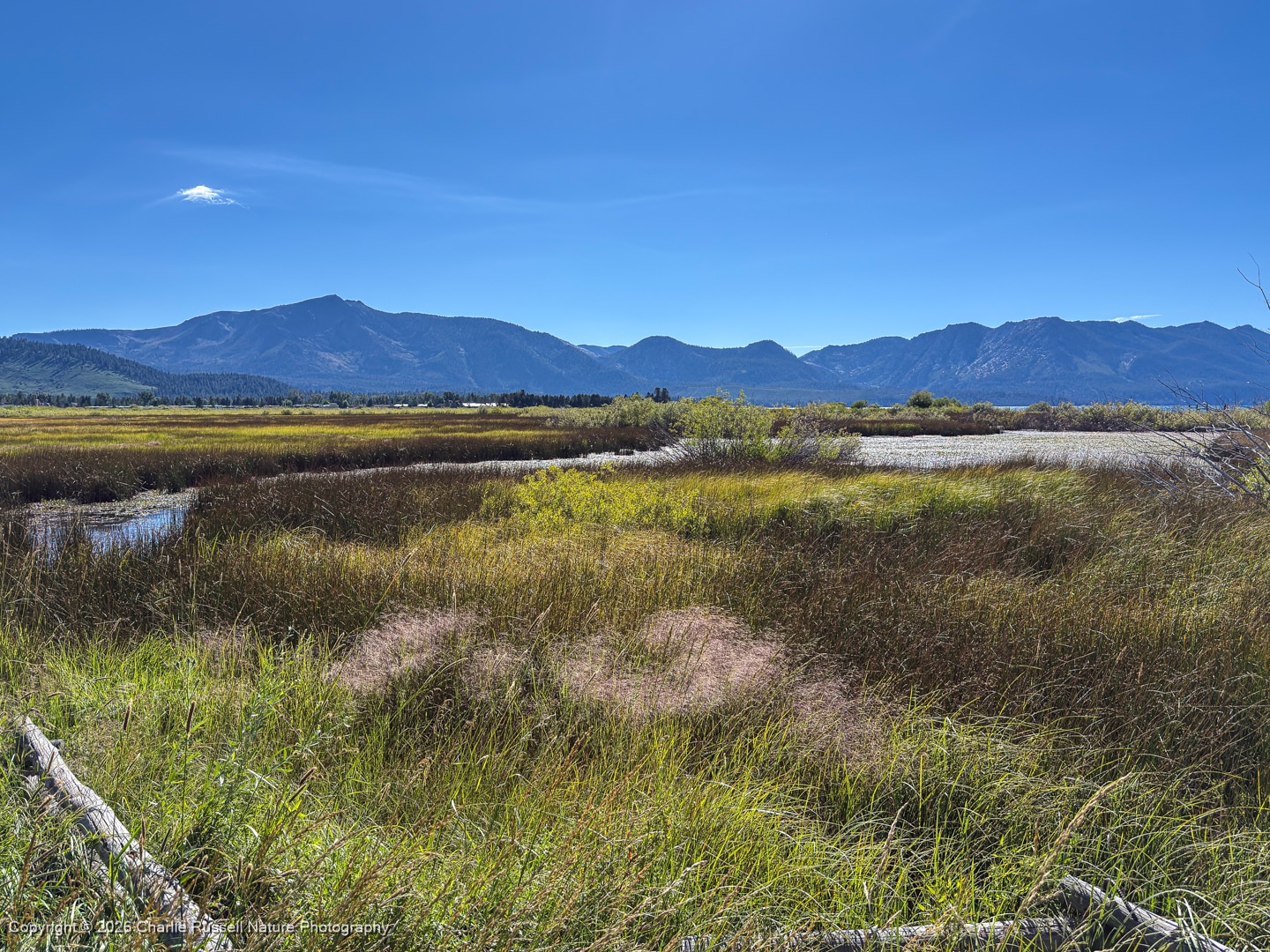
Most photos were taken with a Nikon Z8 camera with a Nikon Z 105mm macro lens (landscape photos are usually taken with an iPhone by me or my wife).
The Hike (and some griping)
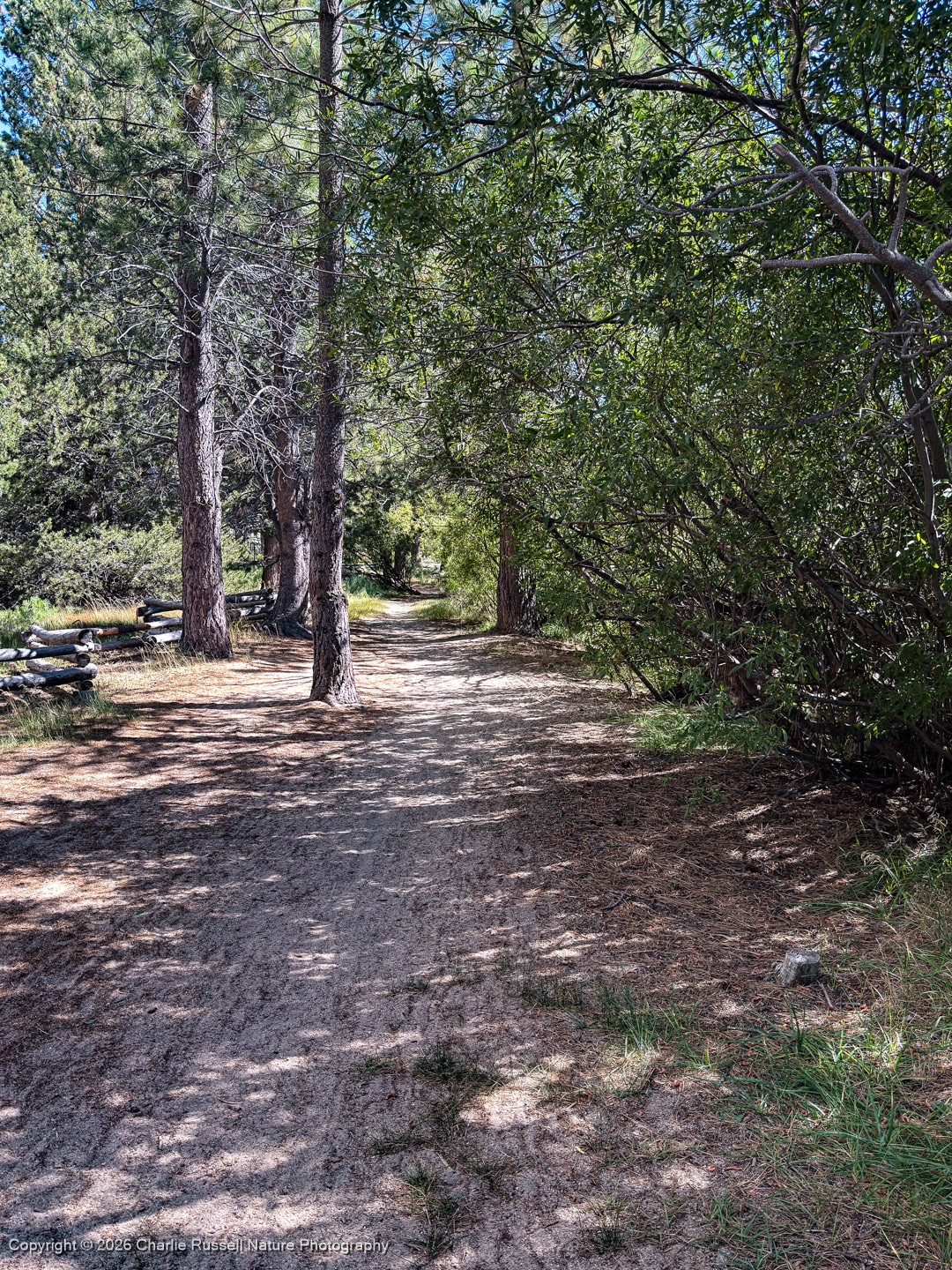
There are several trails in the Upper Truckee Marsh. The one that we took runs along the lake shore. Starting at the end of Lily Drive in South Lake Tahoe, the trail is a nicely shaded path that runs straight north to the lake shore
When you get to this sign, the don’t walk out onto the beach, turn left to follow the trail as it wanders back and forth along the sand, in and out of stands of willows.
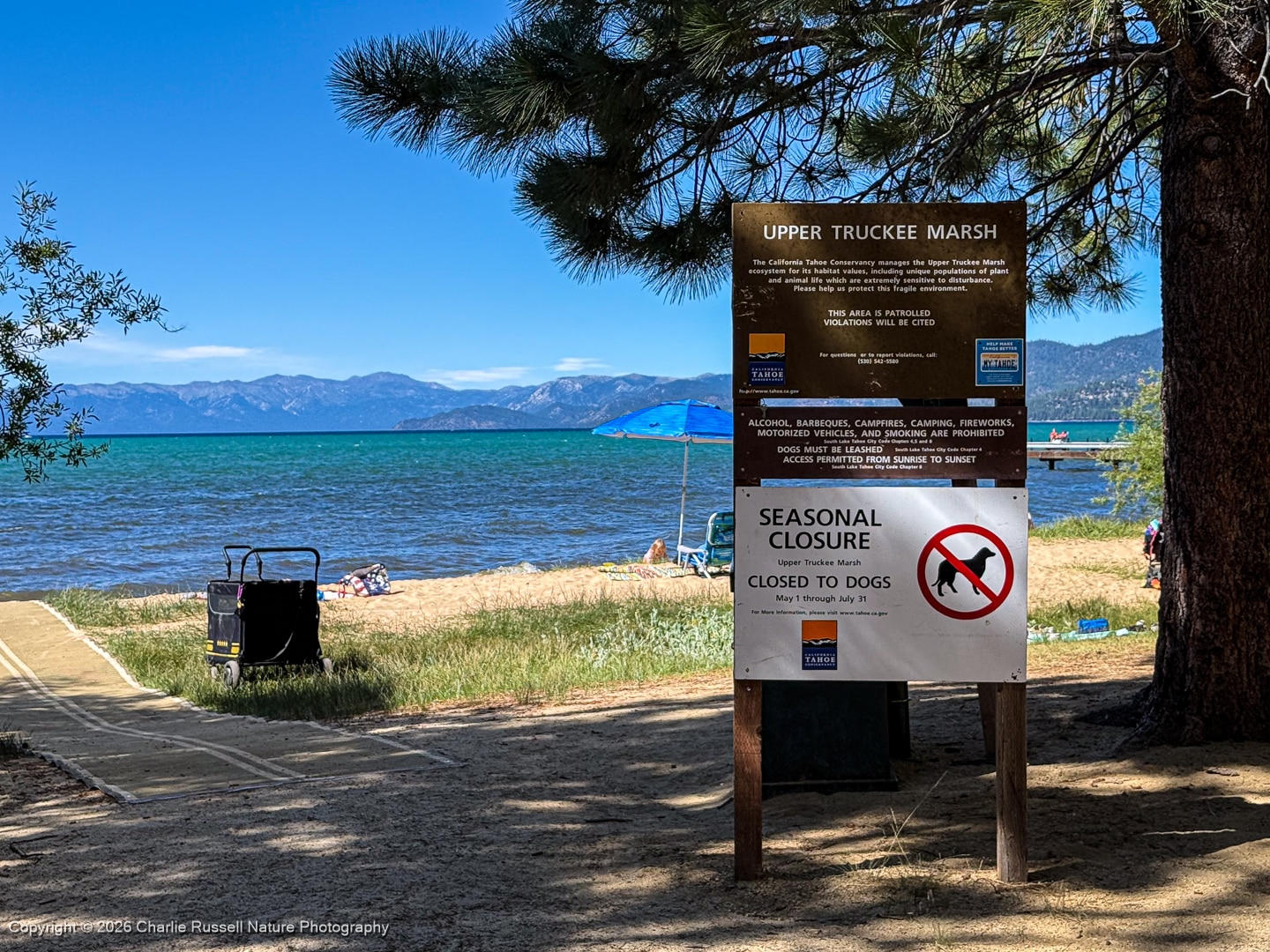
I wonder if people actually read this sign? Sure, the “closed to dogs” part is obvious, but what about the information on “fragile environment”?
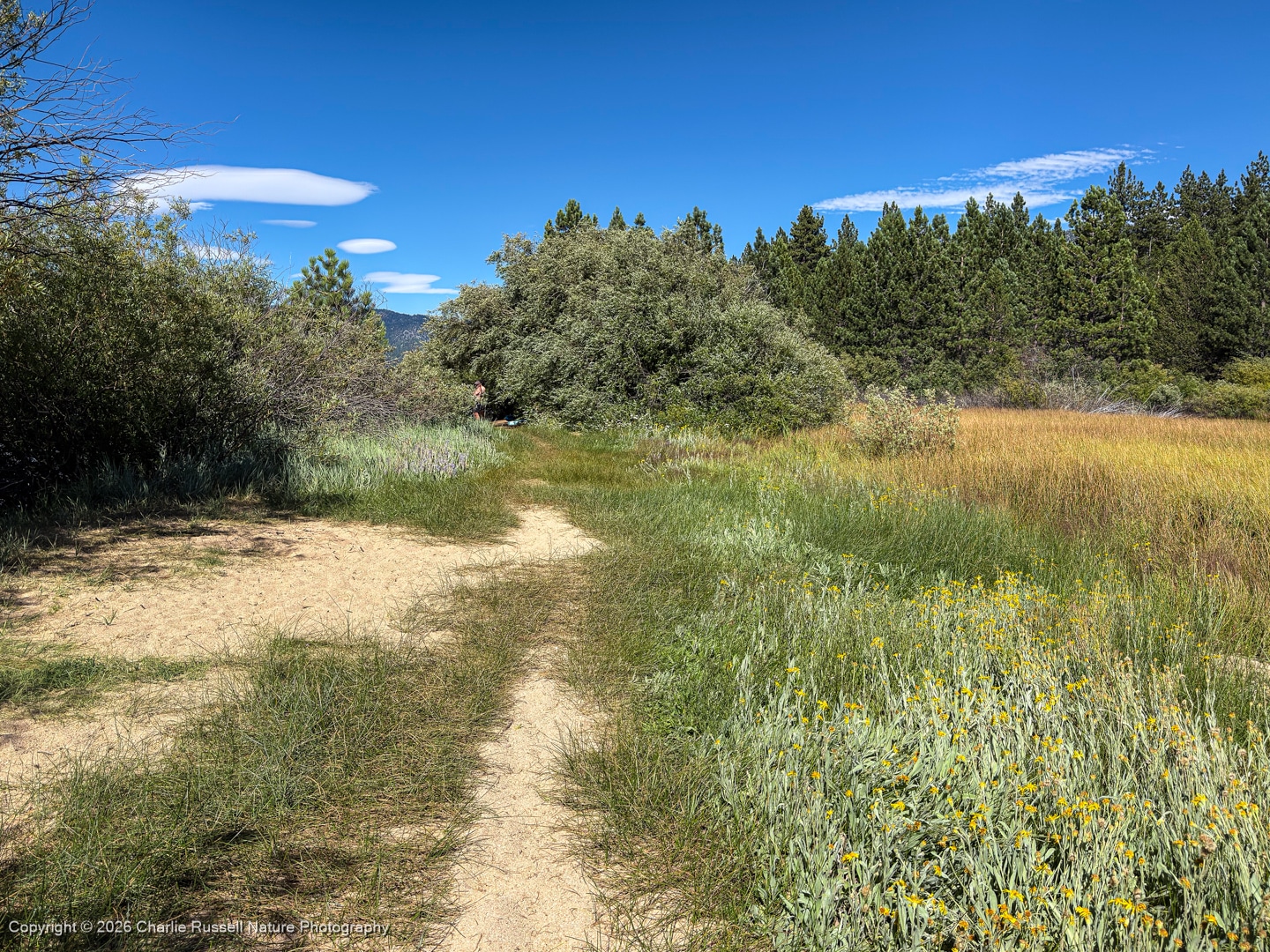
Here’s what you will see as you walk along the path. A stretch of sand, the marsh to one side, and either a big stand of willows on the other, or the open beach. On this visit (late July) most of the interesting flowers were on the edge of the marsh, either in the wet areas or on the edge of the sand. There were a few blooming plants on the beach side, but not many.
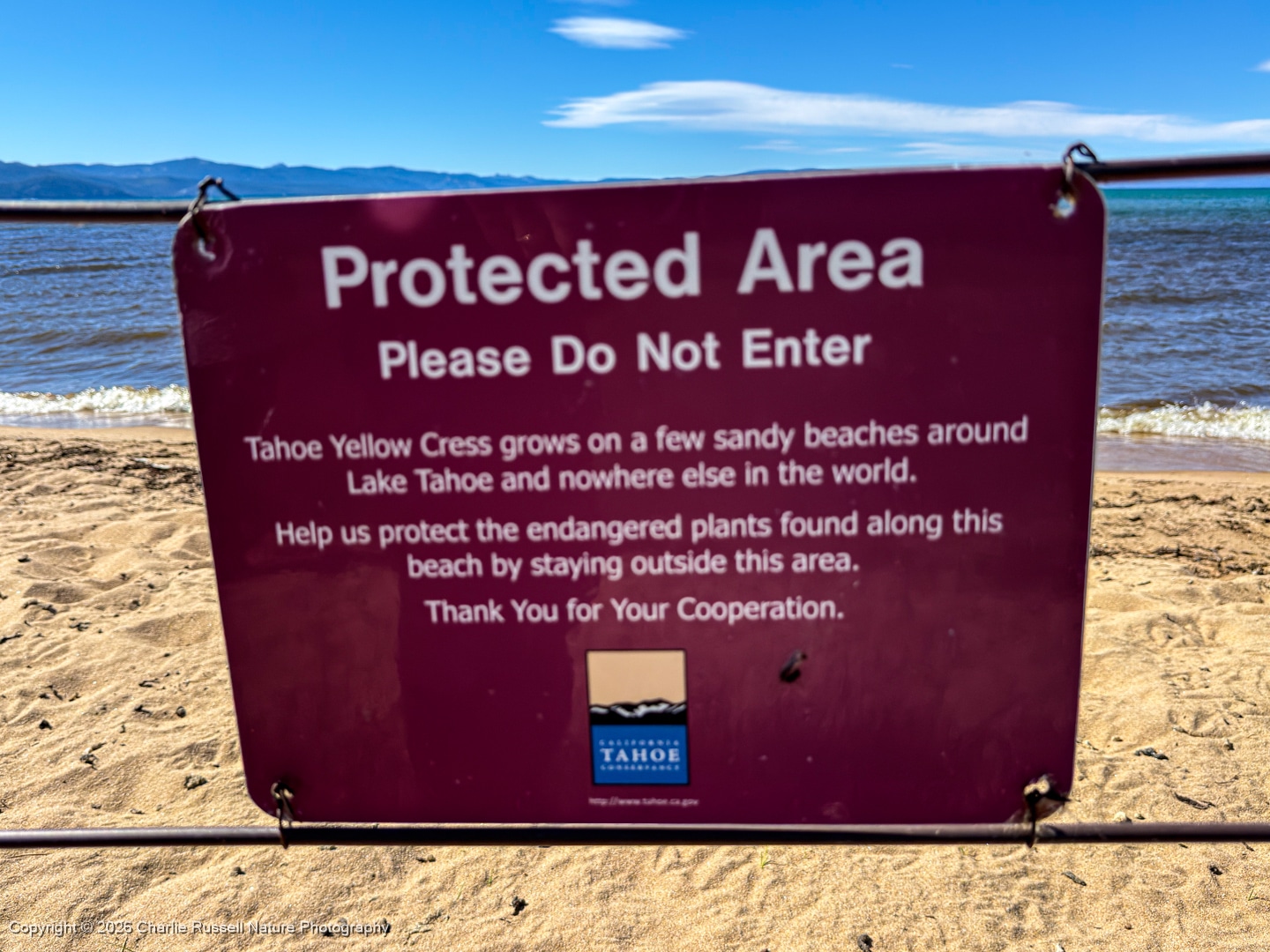
Many sections of the beach are fenced off and marked as “do not enter”. This is the “fragile environment” mentioned in the sign at the start of the trail. This is a habitat for the highly endangered and rare Tahoe yellow cress (Rorippa subumbellata), which is only found in the Lake Tahoe area. Unfortunately, on this visit we didn’t see this plant. What we DID see was people ignoring the “do not enter” signs!
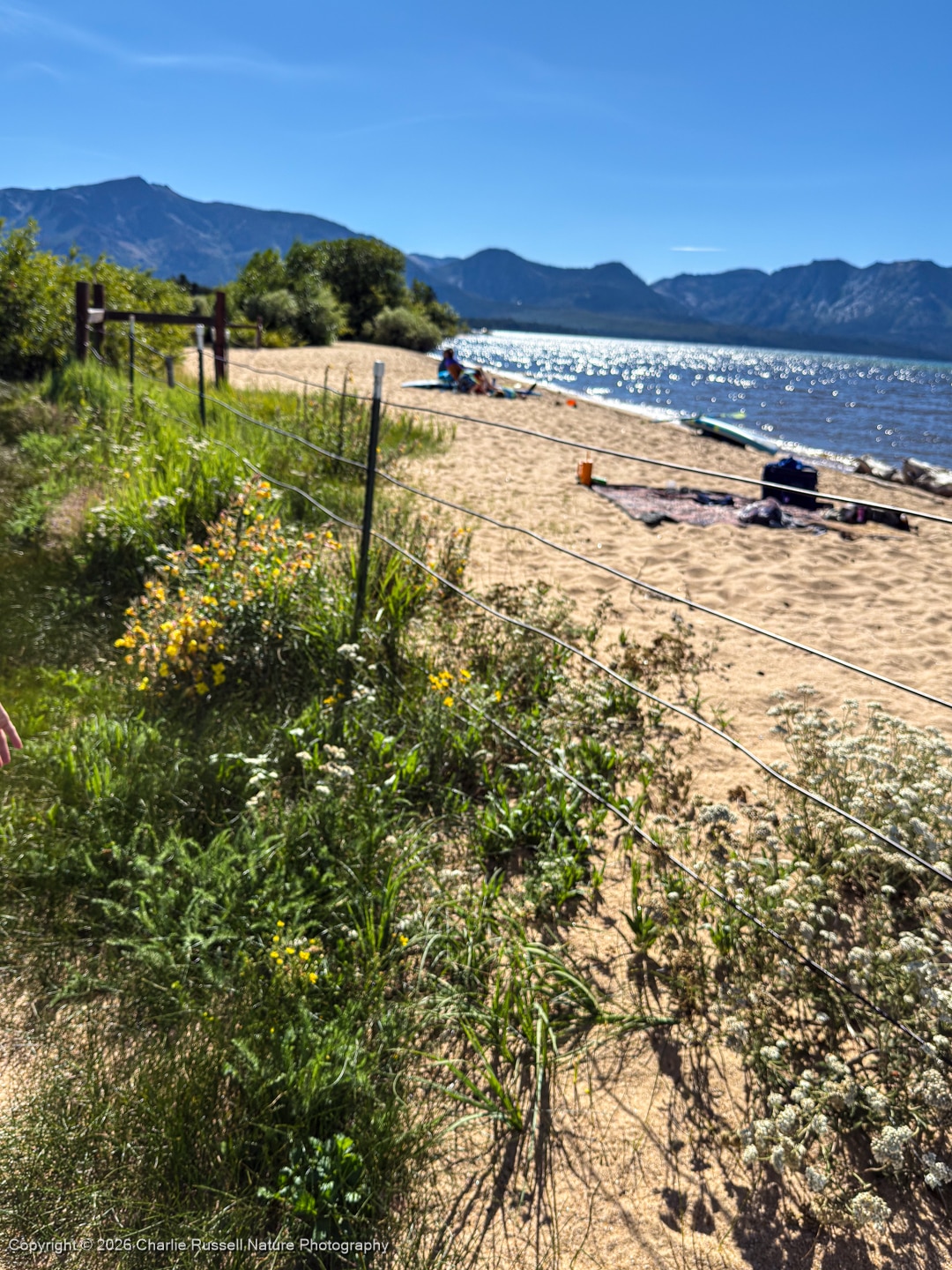
There are multiple sections fenced off, clearly marked, but people just went ahead and tromped about in these areas. I know that Lake Tahoe beaches are crowded in the summertime, so space is precious, but this really made me angry.
Anyways, we went less than a half mile out along the trail and enjoyed the flowers that we did find.
There are other trails into the marsh, on the south end away from the beach, but we haven’t explored those. If you know more about those trails, please leave a comment!
Move your mouse along the elevation graph to show the location on the map. The Refresh icon will re-center the map. The Expand icon will expand to full screen.
Directions
As I mentioned, the trailhead is at the end of Lily Avenue in South Lake Tahoe. Look for Tahnu Leweh park (formerly Lakeview Commons Park) where Lake Tahoe Boulevard / Highway 50 meets Lake Tahoe. There is a traffic signal at the corner with Lakeview Avenue. Head west along Lakeview Avenue for about 8 blocks to a corner where Lakeview intersects with Berkeley Avenue and Bellevue Avenue. Bellevue turns at a 45 degree angle, and I suggest that you look for a place to park along that block. Lily Avenue is a block further southwest from that corner, and it is just a block long. It is marked as NO PARKING. The trailhead is at the far end of Lily Avenue. Wherever you park, please be considerate and don’t block any driveways.
Timing is Everything
We visited this in the last week of July 2026. I suspect that there will be something blooming here any time that you find flowers in the Lake Tahoe basin. Perhaps April through September, maybe even longer? If you want to see the common bladderwort, I would suggest July and August.
Common Bladderwort is Carnivorous!
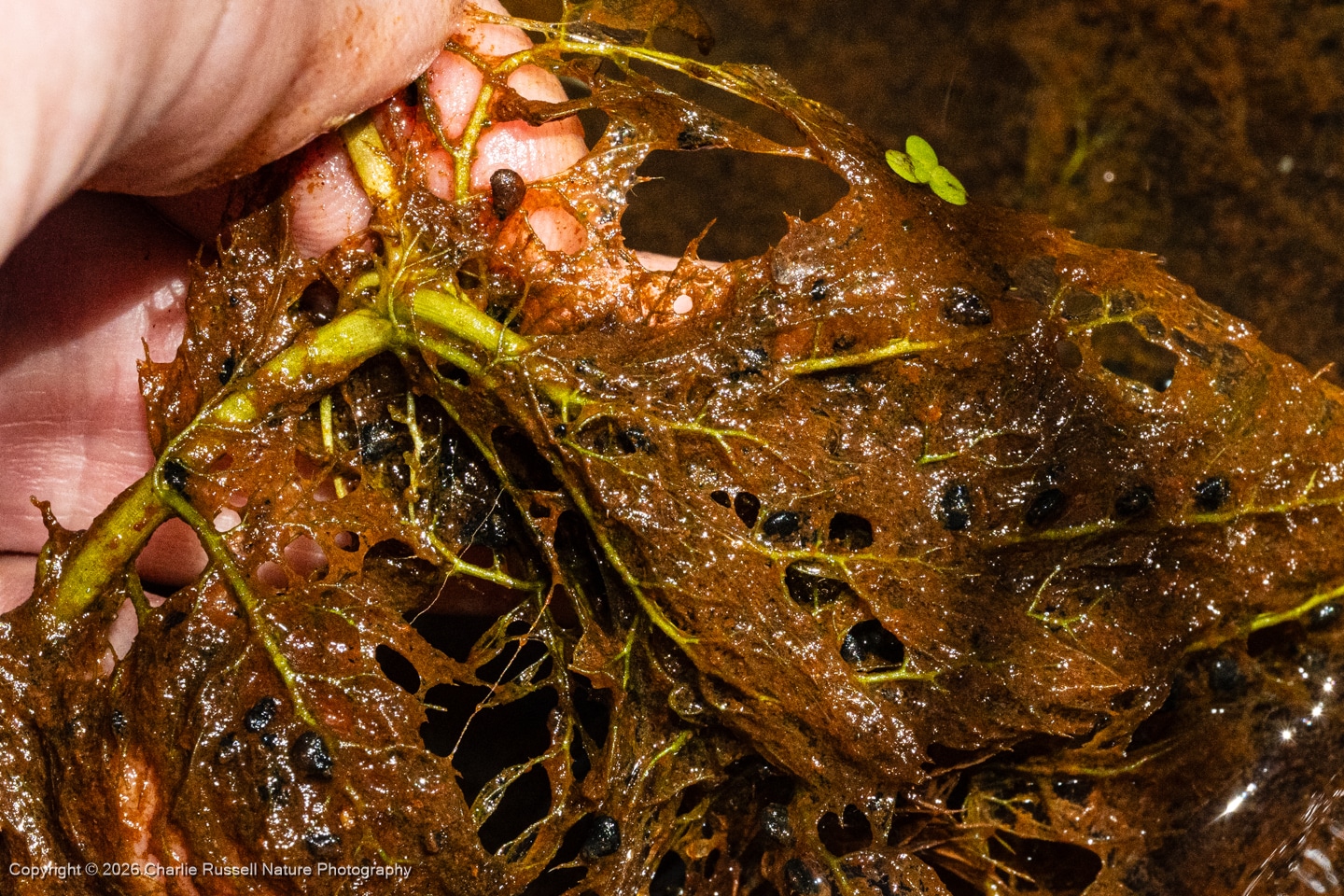
I’m fascinated by carnivorous plants! The only other place that I’ve come across this particular species just a few miles away, off of Pope Beach, and that was harder to reach. These remind me of snapdragons, but they are in a different family. You may not notice the flowers when you walk by (if it is blooming at all). You will see a scattering of leaves floating on what looks like a mass of brown algae and sludge. But, the “algae” are floating roots that may contain hundreds of special trap-like bladders.
This plant consume tiny aquatic animals, like water fleas, protozoa, rotifers, maybe mosquito larvae. The tiny bladders (2 to 5 mm across) pump out water, creating a low-pressure internal vacuum. There is a tiny trap door that is sealed shut by mucus to keep water out. The bladder stores mechanical energy by the flexing in the bladder walls, so that it caves inward.
When a passing prey bumps a trigger hair on that trap door, the seal is broken and the bladder walls expand rapidly. The water rushes into the vacuum at high speed, dragging in the passing prey. The pore will close within 0.002 seconds. If something alive is dragged in, it will be slowly digested.
In this photo (click on the image to see a larger version) you can see some dark brown/black objects in the floating roots – those are bladders that have captured something that they are currently digesting. Empty bladders would be greenish and transparent.
This plant is pollinated primarily by small flying insects, especially bees and flies. Since the plant is entirely submerged, it must push its bright yellow, snapdragon-like flowers out of the water to attract these airborne pollinators.
Upper Truckee Marsh Wildflowers Listing
Any listed in color are endemic to California (that is, found only in California and possibly a bit into Baja California). “nif” means “not in flower”. CNPS numbers are ratings for rare plants by the California Native Plant Society (see my explanation of CNPS ranks). In most cases the scientific name will be a link to a reference source such as Calflora or possibly one of my species pages.
Here’s a listing of the native plants that we found on this visit.
- Common Yarrow, Achillea millefolium
- Chamisso arnica, Arnica chamissonis
- Panicled willow herb, Epilobium brachycarpum
- Fringed willowherb, Epilobium ciliatum
- Primrose monkeyflower, Erythranthe primuloides
- Common mare’s tail, Hippuris vulgaris (nif)
- Lupine sp.
- Wild mint, Mentha canadensis
- Rocky mountain pond-lily (aka Western Yellow Pond-Lily), Nuphar polysepala (nif)
- Hooker’s evening primrose, Oenothera elata ssp. hirsutissima
- Flanged Smartweed Persicaria amphibia var. stipulacea
- Common knotweed, Persicaria lapathifolia
- Biennial cinquefoil, Potentilla biennis
- Slender cinquefoil, Potentilla gracilis
- Woodland pinedrops, Pterospora andromedea
- Willow, Salix sp.
- Western mountain aster, Symphyotrichum occidentale var. occidentale
- Common bladderwort, Utricularia macrorhiza
The following are non-native plants that we found on the hike as well:
- Butter and eggs (aka common toadflax), Linaria vulgaris
Did you find this article helpful? Interesting? Please leave a comment, it helps me understand what people are looking for.
In addition, I don’t hide my content behind a paywall, but if you would like to help me cover my costs, please consider clicking the button below to make a small donation. Thank you!
Click any of the tags below to see articles on similar subjects


